Week 2: Large Language Model, LLM
Table of Contents
Section titled “Table of Contents”- Goal
- Why LLM Matters to Network Engineers
- LLM Processing Pipeline
- Tokenization
- Special Tokens and Context Size
- Word Embedding Matrix
- Embedding Vector Space
- Positional Embedding
- Positional Encoding Calculation
- Decoder-Only Transformer Architecture
- Autoregressive Decoder Loop
- Query, Key, and Value
- Self-Attention
- Causal Mask
- KV Cache
- Multi-Head Attention and Parameter Blocks
- Add & Normalization
- Feed Forward Neural Network
- Next Token Prediction with SoftMax
- Why LLMs Need Parallelism
- Network Engineer View
- Chapter Summary
- Key Terms
- Questions
- Answers
- References
이번 주 목표는 LLM이 텍스트를 어떻게 GPU가 처리할 수 있는 숫자 연산으로 바꾸는지 이해하는 것이다.
핵심 흐름은 다음과 같다.
Text→ Token→ Token ID→ Word Embedding Vector→ Positional Embedding→ Q / K / V→ Self-Attention→ Causal Mask→ Context Vector→ FFNN→ SoftMax→ Next Token이 장의 목적은 특정 GPT 모델을 구현하는 것이 아니라, Transformer 기반 LLM의 기본 연산 구조를 이해하는 것이다. 책에서도 Chapter 7의 목표를 “LLM이 단어의 문맥을 어떻게 이해하는지”와 “왜 LLM 학습이 수백~수천 개 GPU의 병렬화를 요구하는지”로 설명한다.
Why LLM Matters to Network Engineers
Section titled “Why LLM Matters to Network Engineers”네트워크 엔지니어 입장에서 LLM을 봐야 하는 이유는 간단하다.
LLM은 모델 크기, 데이터 크기, 연산 복잡도 때문에 단일 GPU에 머물기 어렵고, 결국 GPU 간 통신 문제로 이어진다.
Transformer 기반 LLM은 RNN처럼 이전 상태를 순차적으로 넘겨받는 방식이 아니라, Self-Attention을 통해 sequence 안의 모든 token 관계를 동시에 계산한다. 이 구조 덕분에 병렬화와 대규모 학습이 가능하지만, 동시에 parameter 수와 activation memory가 크게 증가한다. 책의 앞부분에서도 Transformer 기반 LLM은 모든 token 간 관계를 self-attention으로 가중 계산하며, 이 구조가 수십억 parameter 규모로 확장될 수 있다고 설명한다.
LLM Processing Pipeline
Section titled “LLM Processing Pipeline”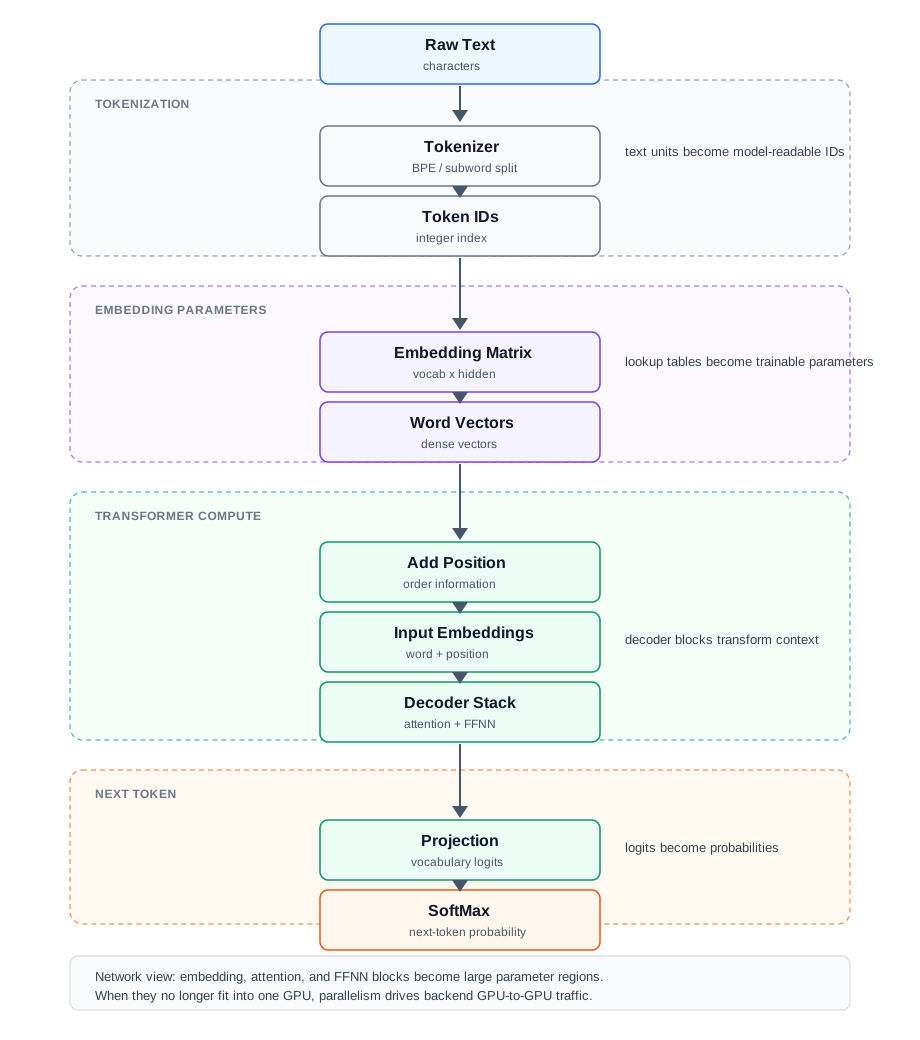
LLM은 문자열을 직접 이해하지 않는다. 먼저 text를 token으로 나누고, token ID를 embedding lookup table에서 vector로 변환한다. 이후 positional embedding을 더해 “어떤 단어가 어느 위치에 있었는지”를 반영하고, Transformer decoder block이 이 vector들을 처리한다.
Tokenization
Section titled “Tokenization”Tokenization은 입력 문장을 model이 처리할 수 있는 단위로 쪼개는 과정이다.
예를 들어:
"unhappiness" → "un" + "happi" + "ness"책에서는 많은 LLM이 Byte Pair Encoding, BPE를 사용한다고 설명한다. BPE는 단어 전체만 vocabulary에 넣는 방식보다 rare word와 subword를 더 효율적으로 처리할 수 있다. 단순한 예제에서는 complete word를 사용하지만, 실제 LLM에서는 subword tokenization이 일반적이다.
%%{init: {"theme": "base", "themeVariables": {"background": "#171717", "primaryColor": "#232323", "primaryTextColor": "#f5f5f5", "primaryBorderColor": "#d0d0d0", "lineColor": "#cfcfcf", "fontFamily": "Inter, Arial, sans-serif"}}}%%
flowchart TB
    classDef input fill:#232323,stroke:#d0d0d0,color:#f5f5f5,stroke-width:2px;
    classDef split fill:#173f32,stroke:#d0d0d0,color:#f5f5f5,stroke-width:2px;
    classDef vocab fill:#3b2f20,stroke:#d0d0d0,color:#f5f5f5,stroke-width:2px;
    classDef output fill:#5a3520,stroke:#d0d0d0,color:#f5f5f5,stroke-width:2px;

    T[Input Text]:::input --> S[Subword Split]:::split
    S --> V[Vocabulary Lookup]:::vocab
    V --> ID[Token IDs]:::output
    ID --> E[Embedding Lookup]:::vocab
Special Tokens and Context Size
Section titled “Special Tokens and Context Size”책에서는 vocabulary의 token value가 2부터 시작하는 예를 든다. 이유는 token 0과 token 1이 일반 단어가 아니라 특수 목적에 사용되기 때문이다.
| Token | 의미 | 역할 |
|---|---|---|
| 0 | Padding | 길이가 다른 sequence를 같은 길이로 맞출 때 사용 |
| 1 | Unknown | Vocabulary에 없는 word 또는 token을 표현할 때 사용 |
| 2+ | Normal token | 실제 word/subword에 매핑되는 token ID |
또 하나 중요한 값은 context size다. Context size는 model이 다음 token을 예측할 때 참고할 수 있는 token sequence 길이를 의미한다. 책에서는 GPT-3 예시에서 context size가 2,048 token이라고 설명한다.
Context size = model이 한 번에 참고할 수 있는 token windowNetwork Engineer 관점에서는 context size가 커질수록 activation memory와 attention 계산량이 증가한다는 점이 중요하다. 이는 결국 GPU memory pressure와 parallelism 요구로 이어진다.
Word Embedding Matrix
Section titled “Word Embedding Matrix”Token ID는 그 자체로 의미를 갖지 않는다. 의미는 Word Embedding Matrix에서 가져온 vector에 들어간다.
token_id = 42→ embedding_matrix[42]→ [0.12, -0.31, 1.07, ...]책에서는 각 token이 Word Embedding Vector로 mapping되고, 이런 vector들의 집합이 Word Embedding Matrix를 이룬다고 설명한다. 또한 embedding dimension이 클수록 단어의 문맥적 정보를 더 많이 담을 수 있다고 설명한다. 예시로 GPT-3의 경우 12,288차원 vector와 약 50,000개 vocabulary를 사용하면 embedding matrix만 약 614.4M parameter가 된다고 제시한다.
Network Engineer 관점
Section titled “Network Engineer 관점”Embedding matrix는 단순한 lookup table처럼 보이지만, 실제로는 거대한 parameter block이다.
vocab_size × hidden_dimension = embedding parameters즉, vocabulary가 커지고 hidden dimension이 커질수록 GPU memory footprint가 증가한다.
Embedding Vector Space
Section titled “Embedding Vector Space”Word embedding은 token을 단순한 ID가 아니라 vector space 안의 점으로 배치하는 과정이다.
책에서는 단순화를 위해 2차원 embedding 예제를 사용한다. 예를 들어 단어들을 adult/child, male/female 같은 의미 축에 따라 배치하면, training 이후 비슷한 의미의 단어는 가까운 위치에 놓이고 서로 대응되는 관계도 일정한 방향성을 갖게 된다.
%%{init: {"theme": "base", "themeVariables": {"background": "#171717", "primaryColor": "#232323", "primaryTextColor": "#f5f5f5", "primaryBorderColor": "#d0d0d0", "lineColor": "#cfcfcf", "fontFamily": "Inter, Arial, sans-serif"}}}%%
flowchart TB
    classDef token fill:#5a3520,stroke:#d0d0d0,color:#f5f5f5,stroke-width:2px;
    classDef train fill:#52676b,stroke:#d0d0d0,color:#f5f5f5,stroke-width:2px;
    classDef space fill:#52676b,stroke:#d0d0d0,color:#f5f5f5,stroke-width:2px;
    classDef metric fill:#52676b,stroke:#d0d0d0,color:#f5f5f5,stroke-width:2px;

    A[Token IDs]:::token --> B[Random Initial Vectors]:::space
    B --> C[Training Updates]:::train
    C --> D[Meaningful Vector Space]:::space
    D --> E[Similar Words Nearby]:::metric
    D --> F[Relationships as Directions]:::metric
중요한 점은 embedding distance가 고정된 규칙이 아니라는 것이다. 책에서도 2D 예제는 설명을 위한 단순화이며, 실제 high-dimensional embedding에서는 Euclidean distance보다 cosine similarity가 단어 관계를 보는 데 더 자주 사용된다고 설명한다.
Network Engineer 관점
Section titled “Network Engineer 관점”Embedding vector space는 의미론적 개념처럼 보이지만, infrastructure 관점에서는 trainable parameter matrix다.
Embedding quality→ larger embedding dimension→ more parameters→ more GPU memory→ more communication when sharded or synchronizedPositional Embedding
Section titled “Positional Embedding”Transformer는 RNN처럼 time step 순서대로 정보를 넘기지 않는다. 따라서 token의 순서를 별도로 알려줘야 한다.
예를 들어 다음 문장에는 clear가 두 번 나온다.
The sky is clear, so she decided to clear the backyard.첫 번째 clear는 형용사이고, 두 번째 clear는 동사다. 그런데 token ID만 보면 둘 다 같은 clear다. 그래서 word embedding만으로는 두 단어의 위치 차이를 표현하기 어렵다. 책에서는 이런 문제를 해결하기 위해 Word Embedding Vector에 Positional Encoding Vector를 더해 최종 word representation을 만든다고 설명한다.
%%{init: {"theme": "base", "themeVariables": {"background": "#171717", "primaryColor": "#232323", "primaryTextColor": "#f5f5f5", "primaryBorderColor": "#d0d0d0", "lineColor": "#cfcfcf", "fontFamily": "Inter, Arial, sans-serif"}}}%%
flowchart LR
    classDef token fill:#5a3520,stroke:#d0d0d0,color:#f5f5f5,stroke-width:2px;
    classDef param fill:#3b2f20,stroke:#d0d0d0,color:#f5f5f5,stroke-width:2px;
    classDef compute fill:#52676b,stroke:#d0d0d0,color:#f5f5f5,stroke-width:2px;
    classDef output fill:#5a3520,stroke:#d0d0d0,color:#f5f5f5,stroke-width:2px;

    A[Token ID]:::token --> B[Word Embedding Vector]:::param
    C[Token Position]:::token --> D[Positional Embedding Vector]:::param
    B --> E[Vector Addition]:::compute
    D --> E
    E --> F[Final Input Embedding]:::output
Final Embedding = Word Embedding + Positional Embedding이렇게 하면 같은 단어라도 문장 내 위치에 따라 다른 representation을 갖게 된다.
Positional Encoding Calculation
Section titled “Positional Encoding Calculation”책에서는 positional encoding을 계산할 때 세 값을 사용한다고 설명한다.
| 변수 | 의미 |
|---|---|
| position | 단어가 sequence 안에서 차지하는 위치 |
| dimension | embedding vector의 차원 수 |
| index | vector 안에서 계산할 축 또는 component |
단순화한 예제에서는 clear가 네 번째 위치에 있고, 2차원 vector를 사용한다. Positional Encoding Vector는 sine/cosine 기반 함수로 계산될 수 있고, 이 vector를 word embedding vector에 더해 final embedding을 만든다.
Word Embedding Vector+ Positional Encoding Vector= Final Word Embedding Vector책의 예시는 clear의 word embedding vector [+2.5, +1.0]에 positional encoding vector [-0.8, +1.0]을 더해 final word embedding vector [+1.7, +2.0]을 만드는 식으로 설명한다.
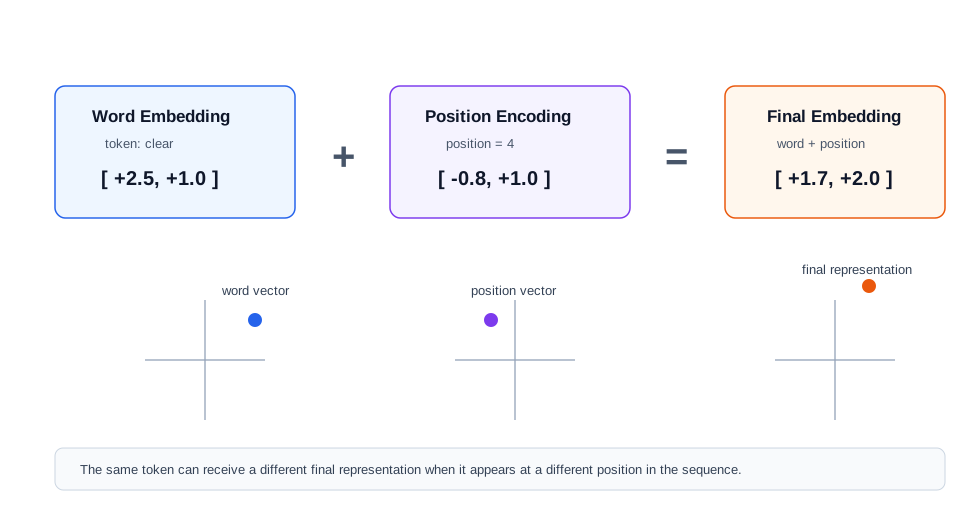
실제 구현에서는 positional encoding이 고정값일 수도 있고, training 중 학습되는 parameter일 수도 있다. 핵심은 Transformer가 token 순서를 직접 순차 처리하지 않기 때문에 위치 정보를 별도 vector로 주입해야 한다는 점이다.
Decoder-Only Transformer Architecture
Section titled “Decoder-Only Transformer Architecture”GPT 계열 LLM은 보통 decoder-only Transformer 구조로 설명된다.
책에서는 decoder-only Transformer를 다음 흐름으로 설명한다.
Final Word Embedding→ Q/K/V 생성→ Self-Attention→ Add & Normalization→ Feed Forward Neural Network→ Add & Normalization→ SoftMax→ Next Token Prediction각 decoder module은 attention layer, add & normalization layer, feedforward neural network로 구성된다. 마지막 decoder의 output은 vocabulary 전체에 대한 확률 분포로 변환되고, 그중 가장 가능성 높은 token이 다음 token으로 선택된다.
%%{init: {"theme": "base", "themeVariables": {"background": "#171717", "primaryColor": "#232323", "primaryTextColor": "#f5f5f5", "primaryBorderColor": "#d0d0d0", "lineColor": "#cfcfcf", "fontFamily": "Inter, Arial, sans-serif"}}}%%
flowchart TB
    classDef input fill:#232323,stroke:#d0d0d0,color:#f5f5f5,stroke-width:2px;
    classDef projection fill:#62164d,stroke:#d0d0d0,color:#f5f5f5,stroke-width:2px;
    classDef attention fill:#232323,stroke:#d0d0d0,color:#f5f5f5,stroke-width:2px;
    classDef norm fill:#232323,stroke:#d0d0d0,color:#f5f5f5,stroke-width:2px;
    classDef ffn fill:#52676b,stroke:#d0d0d0,color:#f5f5f5,stroke-width:2px;
    classDef output fill:#5a3520,stroke:#d0d0d0,color:#f5f5f5,stroke-width:2px;

    X[Input Embedding]:::input --> QKV[Q / K / V Projection]:::projection
    QKV --> ATT[Self-Attention]:::attention
    ATT --> ADD1[Residual Add + LayerNorm]:::norm
    ADD1 --> FFN[Feed Forward Neural Network]:::ffn
    FFN --> ADD2[Residual Add + LayerNorm]:::norm
    ADD2 --> OUT[Decoder Output]:::output
Autoregressive Decoder Loop
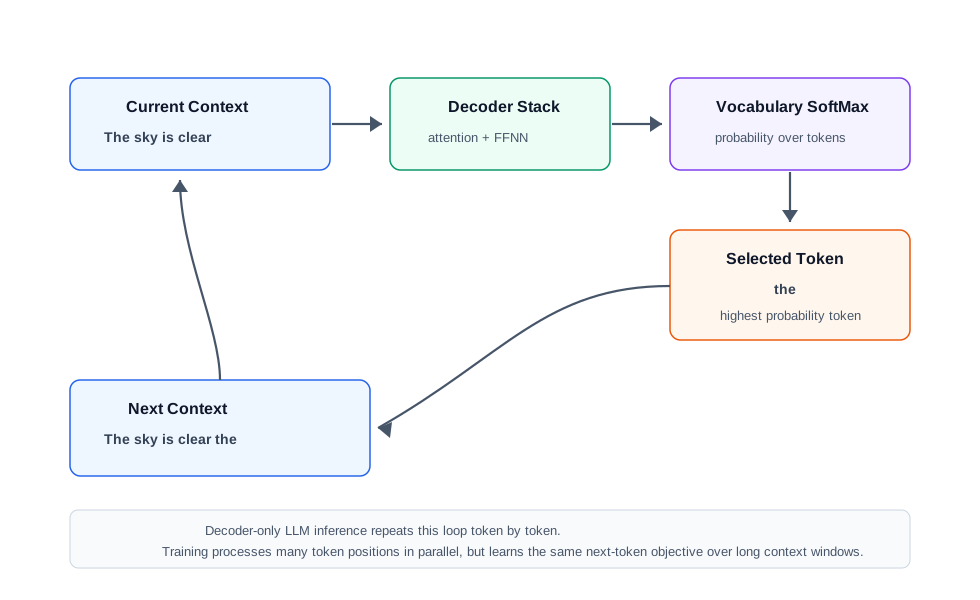
Section titled “Autoregressive Decoder Loop”Decoder-only Transformer는 autoregressive 방식으로 next token을 생성한다. 즉, 한 번에 전체 문장을 완성하는 것이 아니라, 지금까지의 token sequence를 보고 다음 token 하나를 예측한 뒤, 그 token을 다시 다음 step의 입력으로 사용한다.
Current token sequence→ decoder stack→ vocabulary probability→ selected next token→ token-to-word lookup→ append to sequence→ next decoder step책에서는 마지막 decoder 이후 SoftMax layer가 complete vocabulary를 대상으로 next word를 예측하고, 예측된 word/token이 다시 다음 decoder processing에 들어간다고 설명한다. 이 과정 때문에 inference에서는 token을 순차적으로 생성하고, training에서는 긴 sequence와 context size가 activation memory와 attention 계산량을 키운다.
Network Engineer 관점
Section titled “Network Engineer 관점”Autoregressive generation 자체는 inference latency와 연결되고, training 관점에서는 긴 sequence를 처리하기 위한 memory pressure와 parallelism 요구로 연결된다.
Longer sequence→ larger attention workload→ more activation memory→ more pressure for tensor / pipeline parallelismQuery, Key, and Value
Section titled “Query, Key, and Value”Transformer는 입력 embedding vector를 그대로 attention에 넣지 않는다. 먼저 세 개의 vector로 projection한다.
| Vector | 직관적 의미 | 역할 |
|---|---|---|
| Query, Q | 내가 찾고 싶은 정보 | 현재 token이 다른 token에게 던지는 질문 |
| Key, K | 내가 가진 정보의 색인 | 다른 token이 어떤 정보를 담고 있는지 비교 기준 제공 |
| Value, V | 실제 전달할 정보 | attention score에 따라 섞여 context vector 생성 |
책에서는 word embedding vector가 pretrained Query, Key, Value weight matrix와 곱해져 Q/K/V vector가 생성되고, 이들이 Transformer self-attention의 입력으로 사용된다고 설명한다.
Q/K/V projection에서 중요한 점은 같은 self-attention layer 안에서는 모든 token이 같은 Q/K/V weight matrix를 공유한다는 것이다. 이렇게 해야 sequence 안의 모든 token이 같은 방식으로 변환된다. 반면 decoder layer가 달라지면 각 layer는 자기만의 Q/K/V weight matrix를 갖는다. 즉, 깊은 layer로 갈수록 같은 token도 다른 representation으로 변환될 수 있다.
Same self-attention layer→ same Q/K/V matrices for all tokens
Different decoder layer→ different Q/K/V matrices→ deeper semantic transformations
책의 단순 예제에서는 계산량을 줄이기 위해 5차원 word vector를 3차원 Query vector로 줄이는 projection을 보여준다. Infrastructure 관점에서는 이런 projection matrix도 모두 trainable parameter이며, model size와 GPU memory footprint에 포함된다.
Self-Attention
Section titled “Self-Attention”Self-Attention은 한 token이 sequence 안의 다른 token들을 얼마나 참고해야 하는지 계산한다.
%%{init: {"theme": "base", "themeVariables": {"background": "#171717", "primaryColor": "#232323", "primaryTextColor": "#f5f5f5", "primaryBorderColor": "#d0d0d0", "lineColor": "#cfcfcf", "fontFamily": "Inter, Arial, sans-serif"}}}%%
flowchart LR
    classDef qkv fill:#52676b,stroke:#d0d0d0,color:#f5f5f5,stroke-width:2px;
    classDef compute fill:#52676b,stroke:#d0d0d0,color:#f5f5f5,stroke-width:2px;
    classDef softmax fill:#52676b,stroke:#d0d0d0,color:#f5f5f5,stroke-width:2px;
    classDef weight fill:#232323,stroke:#d0d0d0,color:#f5f5f5,stroke-width:2px;
    classDef output fill:#5a3520,stroke:#d0d0d0,color:#f5f5f5,stroke-width:2px;

    Q[Query]:::qkv --> DOT[Q · K]:::compute
    K[Key]:::qkv --> DOT
    DOT --> SCALE[Scale]:::compute
    SCALE --> SM[SoftMax]:::softmax
    SM --> WEIGHT[Attention Weights]:::weight
    V[Value]:::qkv --> MIX[Weighted Sum]:::compute
    WEIGHT --> MIX
    MIX --> C[Context Vector]:::output
핵심 흐름은 다음과 같다.
Q와 K를 dot product→ scaling→ SoftMax로 attention probability 계산→ probability를 V에 곱함→ context vector 생성책에서도 query vector와 key vector의 matrix multiplication 결과를 key dimension의 square root로 나누고, softmax를 적용해 probability를 만든 뒤, 이 결과를 value vector와 곱해 context vector를 만든다고 설명한다.
Network Engineer 관점
Section titled “Network Engineer 관점”Self-Attention 자체는 GPU 내부 matrix multiplication으로 보이지만, 모델이 커지면 Q/K/V projection weight와 attention output, activation을 한 GPU에 담기 어려워진다. 이 지점에서 tensor parallelism, pipeline parallelism, data parallelism이 등장한다.
Causal Mask
Section titled “Causal Mask”Decoder-only LLM에서 Self-Attention은 모든 token pair의 attention score를 matrix로 계산한다. 하지만 next token prediction을 학습할 때 현재 위치의 token이 자기보다 뒤에 있는 future token을 볼 수 있으면 정답을 미리 보는 문제가 생긴다. 이를 막기 위해 causal mask를 적용한다.
책 7장에서는 causal mask라는 용어를 직접 설명하지는 않지만, context size를 next word 예측에 참고하는 preceding words의 길이로 설명하고, clear 예제에서도 현재 단어와 preceding words의 Key vector를 사용해 next word를 예측하는 흐름을 보여준다. Causal mask는 이 decoder-only/autoregressive 구조를 실제 attention matrix에서 구현할 때 필요한 제약 조건이다.
Token position i→ can attend to positions 0..i→ cannot attend to positions i+1..end예를 들어 sequence가 다음과 같다고 하자.
The sky is clearis 위치를 학습할 때는 The, sky, is까지만 참고할 수 있어야 한다. 뒤에 있는 clear를 보면 next token prediction 문제가 너무 쉬워지고, inference에서 실제로 사용할 수 없는 정보를 학습하게 된다.
Attention score matrix 관점에서는 causal mask가 upper triangle 영역을 막는다.
Key position The sky is clearQuery The OK X X X sky OK OK X X is OK OK OK X clear OK OK OK OK실제 구현에서는 future position의 attention score에 매우 작은 값, 보통 -inf에 가까운 값을 더한 뒤 SoftMax를 적용한다. 그러면 masked position의 attention probability가 0에 가까워진다.
attention_scores + causal_mask→ SoftMax→ future token probability ≈ 0Network Engineer 관점
Section titled “Network Engineer 관점”Causal mask는 trainable parameter가 아니라 attention 계산의 제약 조건이다. 하지만 sequence length가 길어질수록 attention score matrix 자체가 커지므로, mask를 적용하더라도 attention workload와 activation memory는 context size에 따라 증가한다.
Longer context→ larger attention score matrix→ larger masked SoftMax workload→ more GPU memory pressure네트워크 엔지니어 입장에서는 causal mask 자체보다 긴 context가 GPU compute/memory 시간을 늘리고, 그 결과 GPU 간 동기화와 pipeline stage 대기 시간이 길어질 수 있다는 점을 봐야 한다.
KV Cache
Section titled “KV Cache”책 7장에서는 KV Cache라는 용어를 직접 설명하지 않는다. 하지만 책이 설명하는 autoregressive decoder loop를 실제 inference에서 빠르게 실행하려면 KV Cache가 중요해진다.
Decoder-only LLM은 token을 하나씩 생성한다. 새 token을 만들 때마다 attention은 지금까지 생성된 모든 이전 token을 참고해야 한다.
Step 1: TheStep 2: The skyStep 3: The sky isStep 4: The sky is clearKV Cache가 없으면 Step 4에서 The, sky, is, clear 전체를 다시 decoder에 넣고, 모든 layer에서 이전 token들의 Key와 Value를 다시 계산해야 한다. 이미 한 번 계산한 이전 token의 K/V를 매 step 반복 계산하는 셈이다.
KV Cache는 이전 token들의 Key vector와 Value vector를 저장해 두는 inference용 memory buffer다. 다음 token을 생성할 때 새 token의 Query만 계산하고, 이 Query를 cache에 저장된 과거 K/V와 비교한다.
Without KV Cache→ every step recomputes old tokens' K/V
With KV Cache→ keep old K/V→ compute only new token's K/V→ compare new Query with cached Keys
왜 KV Cache가 커지는가?
Section titled “왜 KV Cache가 커지는가?”KV Cache는 generated text가 길어질수록 계속 누적된다. 이유는 간단하다. 다음 token을 예측하려면 과거 token을 버릴 수 없기 때문이다.
1 token generated → store K/V for 1 token100 tokens → store K/V for 100 tokens2,048 tokens → store K/V for 2,048 tokens더 중요한 점은 K/V가 한 군데만 저장되는 것이 아니라, 모든 decoder layer마다 저장된다는 것이다. 96-layer model이라면 token 하나를 생성할 때마다 96개 layer 각각에 K와 V가 추가된다.
KV Cache size grows with:
batch size× sequence length× number of decoder layers× 2              # Key and Value× hidden/head dimension× bytes per value
쉽게 말하면 KV Cache는 “대화 기록의 원문”을 저장하는 것이 아니라, model의 각 layer가 attention에 바로 사용할 수 있도록 변환해 둔 K/V tensor 기록이다. 그래서 같은 2,048 token context라도 model이 깊고 hidden dimension이 클수록 cache memory가 훨씬 커진다.
Network Engineer 관점
Section titled “Network Engineer 관점”KV Cache는 inference에서 latency를 줄이기 위한 trade-off다.
Less recomputation→ faster token generation→ more persistent GPU memory usage서비스 관점에서는 동시 요청 수가 늘어나면 KV Cache도 함께 늘어난다.
More concurrent users→ larger total batch/session KV Cache→ lower available GPU memory for new requests→ scheduling, batching, eviction pressure따라서 inference serving에서는 model parameter memory뿐 아니라 KV Cache memory도 capacity planning에 포함해야 한다. 긴 context, 큰 batch, 많은 동시 세션은 모두 GPU memory pressure와 tail latency를 키울 수 있다.
네트워크 엔지니어 입장에서는 KV Cache를 backend fabric bandwidth 문제라기보다 GPU memory capacity와 request scheduling 문제로 먼저 해석하는 것이 좋다. GPU memory가 cache로 잠기면 batch 크기와 동시 세션 수가 줄고, 결국 admission control, prefill/decode 분리, scale-out 정책에 영향을 준다.
Multi-Head Attention and Parameter Blocks
Section titled “Multi-Head Attention and Parameter Blocks”책의 conclusion에서는 GPT-3 같은 대규모 Transformer block에서 attention layer가 multi-head self-attention으로 구현되며, Q/K/V projection과 attention output projection이 큰 parameter block을 만든다고 설명한다.
단순화하면 attention layer의 주요 trainable matrix는 다음과 같다.
| Parameter block | 역할 |
|---|---|
| Query projection | input embedding을 Query vector로 변환 |
| Key projection | input embedding을 Key vector로 변환 |
| Value projection | input embedding을 Value vector로 변환 |
| Output projection | 여러 attention head의 결과를 다음 layer 형태로 변환 |
%%{init: {"theme": "base", "themeVariables": {"background": "#171717", "primaryColor": "#232323", "primaryTextColor": "#f5f5f5", "primaryBorderColor": "#d0d0d0", "lineColor": "#cfcfcf", "fontFamily": "Inter, Arial, sans-serif"}}}%%
flowchart LR
    classDef input fill:#232323,stroke:#d0d0d0,color:#f5f5f5,stroke-width:2px;
    classDef head fill:#232323,stroke:#d0d0d0,color:#f5f5f5,stroke-width:2px;
    classDef param fill:#3b2f20,stroke:#d0d0d0,color:#f5f5f5,stroke-width:2px;
    classDef output fill:#5a3520,stroke:#d0d0d0,color:#f5f5f5,stroke-width:2px;

    X[Input Embedding]:::input --> QKV[Q / K / V Projections]:::param
    QKV --> H1[Attention Head 1]:::head
    QKV --> H2[Attention Head 2]:::head
    QKV --> HN[Attention Head N]:::head
    H1 --> O[Output Projection]:::param
    H2 --> O
    HN --> O
    O --> Y[Attention Output]:::output
책에서는 GPT-3 규모 예시에서 attention layer의 Q/K/V projection과 output projection이 block당 대략 수억 개 parameter를 차지할 수 있다고 설명한다. Network Engineer 입장에서는 이 parameter block이 커질수록 tensor parallelism의 대상이 되고, GPU 간 tensor shard communication이 늘어난다는 점이 중요하다.
Add & Normalization
Section titled “Add & Normalization”Attention output은 바로 다음 layer로 넘어가지 않는다. 원래 input embedding과 attention output을 더하는 residual connection이 들어간다.
normalized_output = LayerNorm(input_embedding + attention_output)이 구조는 깊은 Transformer block을 안정적으로 학습시키는 데 중요하다. 책에서는 attention block 이후와 FFNN 이후에 residual connection과 layer normalization이 들어간다고 설명한다.
LayerNorm은 vector component의 평균과 분산을 사용해 값을 안정적인 범위로 다시 맞춘다. 책의 예제도 mean을 구하고, 각 component에서 mean을 뺀 뒤, squared difference와 standard deviation을 사용해 normalized output을 만드는 흐름으로 설명한다.
Infrastructure 관점에서는 LayerNorm 자체의 parameter 수는 attention/FFNN에 비해 작지만, 깊은 decoder stack에서 반복적으로 실행되므로 training step time에는 영향을 줄 수 있다.
Feed Forward Neural Network
Section titled “Feed Forward Neural Network”Transformer decoder 안의 FFNN은 각 token별로 독립적으로 적용되는 작은 MLP라고 보면 된다.
일반적인 구조는 다음과 같다.
hidden dimension→ 4 × hidden dimension→ hidden dimension책에서는 decoder FFNN의 hidden layer가 보통 input layer보다 약 4배 큰 구조를 갖고, output dimension은 다시 context vector와 같은 dimension으로 맞춘다고 설명한다. 이렇게 해야 다음 decoder block으로 같은 형태의 vector를 넘길 수 있다.
책의 단순 예제에서는 hidden layer가 input보다 3배 큰 형태로 설명되지만, 대규모 Transformer의 일반적인 구조는 hidden dimension을 약 4배로 확장한 뒤 다시 원래 dimension으로 줄이는 방식이다. 중간 hidden layer에서는 weighted sum과 ReLU 같은 activation function을 적용한다.
%%{init: {"theme": "base", "themeVariables": {"background": "#171717", "primaryColor": "#232323", "primaryTextColor": "#f5f5f5", "primaryBorderColor": "#d0d0d0", "lineColor": "#cfcfcf", "fontFamily": "Inter, Arial, sans-serif"}}}%%
flowchart LR
    classDef input fill:#232323,stroke:#d0d0d0,color:#f5f5f5,stroke-width:2px;
    classDef projection fill:#62164d,stroke:#d0d0d0,color:#f5f5f5,stroke-width:2px;
    classDef compute fill:#52676b,stroke:#d0d0d0,color:#f5f5f5,stroke-width:2px;
    classDef output fill:#5a3520,stroke:#d0d0d0,color:#f5f5f5,stroke-width:2px;

    A[Context Vector d_model]:::input --> B[Linear Up Projection 4x]:::projection
    B --> C[Activation]:::compute
    C --> D[Linear Down Projection d_model]:::projection
    D --> E[FFNN Output]:::output
Attention은 token 간 관계를 섞는 역할이고, FFNN은 각 token의 representation을 더 풍부하게 변환하는 역할이다.
Next Token Prediction with SoftMax
Section titled “Next Token Prediction with SoftMax”마지막 decoder block의 output은 바로 단어가 아니다. 먼저 vocabulary 크기의 vector로 변환된다.
decoder_output→ vocabulary logits→ SoftMax→ next token probabilitySoftMax는 vocabulary 전체에 대해 다음 token이 될 확률 분포를 만든다. 책에서는 decoder output이 직접 next word를 의미하는 것이 아니라, vocabulary 전체에 대한 probability distribution으로 변환되어야 한다고 설명한다.
%%{init: {"theme": "base", "themeVariables": {"background": "#171717", "primaryColor": "#232323", "primaryTextColor": "#f5f5f5", "primaryBorderColor": "#d0d0d0", "lineColor": "#cfcfcf", "fontFamily": "Inter, Arial, sans-serif"}}}%%
flowchart LR
    classDef input fill:#232323,stroke:#d0d0d0,color:#f5f5f5,stroke-width:2px;
    classDef projection fill:#62164d,stroke:#d0d0d0,color:#f5f5f5,stroke-width:2px;
    classDef logits fill:#173f32,stroke:#d0d0d0,color:#f5f5f5,stroke-width:2px;
    classDef softmax fill:#52676b,stroke:#d0d0d0,color:#f5f5f5,stroke-width:2px;
    classDef output fill:#5a3520,stroke:#d0d0d0,color:#f5f5f5,stroke-width:2px;

    A[Decoder Output]:::input --> B[Linear Projection to Vocabulary Size]:::projection
    B --> C[Logits]:::logits
    C --> D[SoftMax]:::softmax
    D --> E[Next Token Probability]:::output
    E --> F[Selected Token]:::output
마지막으로 선택된 token은 token-to-word lookup을 통해 word로 바뀐다. Autoregressive model에서는 이 token이 다음 iteration의 입력으로 다시 들어간다.
Selected token→ token-to-word lookup→ next input token→ embedding lookup→ positional encoding→ next decoder passWhy LLMs Need Parallelism
Section titled “Why LLMs Need Parallelism”LLM이 병렬화를 요구하는 이유는 세 가지다.
| 원인 | 설명 | 결과 |
|---|---|---|
| Model Size | Parameter 수가 매우 큼 | 단일 GPU VRAM 초과 |
| Activation Memory | Forward/Backward 중간값 저장 필요 | 학습 시 memory pressure 증가 |
| Dataset Size | 대규모 corpus 학습 | 긴 학습 시간 |
| Computation | Q/K/V, Attention, FFNN matrix multiplication 반복 | GPU cluster 필요 |
| Synchronization | gradient, activation, tensor shard 교환 | backend network 필요 |
책에서는 GPT-3 같은 모델이 96개 decoder block을 갖고, attention layer와 FFNN layer가 대규모 parameter를 차지한다고 설명한다. 특히 FFNN layer는 block당 약 1.2B parameter 수준까지 커질 수 있으며, 전체 모델은 약 175B trainable parameter 규모가 된다고 설명한다. 그래서 학습은 여러 GPU에 분산되어야 하고, 선택한 parallelization strategy에 따라 실행되어야 한다.
GPT-3 규모 예시를 parameter block 관점에서 보면 다음과 같다.
| Component | 규모 감각 | Infrastructure 의미 |
|---|---|---|
| Attention layer | Q/K/V + output projection이 block당 수억 parameter | tensor shard와 activation 교환 증가 |
| Add & Normalize layers | parameter 수는 상대적으로 작음 | 반복 실행되며 training step latency에 영향 |
| FFNN layer | block당 약 1.2B parameter 수준까지 커질 수 있음 | model memory와 tensor parallelism 압력 |
| Full model | 약 175B trainable parameter | multi-GPU/multi-node training 필요 |
Network Engineer View
Section titled “Network Engineer View”LLM을 네트워크 관점에서 보면 training과 inference를 나눠 봐야 한다. Training에서는 parameter, activation, gradient를 여러 GPU에 나누기 때문에 backend network가 직접 병목이 된다.
LLM parameter 증가→ GPU memory 부족→ model / tensor / pipeline / data parallelism 필요→ GPU 간 activation, gradient, parameter shard 교환→ backend network traffic 증가→ low latency, high bandwidth, lossless fabric 요구책 전체의 관점도 이와 같다. 현대 Deep Learning model은 단일 GPU/CPU memory를 초과할 수 있고, 이 경우 training은 여러 processor에 분산된다. intra-node GPU 통신은 NVLink 같은 고속 interconnect를 사용하고, inter-node 통신은 InfiniBand 또는 Ethernet 기반 backend network에 의존한다. 이때 parameter synchronization은 높은 throughput, ultra-low latency, zero packet loss를 요구한다.
Inference에서는 병목이 조금 다르게 보인다. Autoregressive decoding은 token을 하나씩 생성하므로 latency가 누적되고, 긴 context는 attention score matrix와 KV Cache를 키운다. Causal mask는 network traffic을 직접 만들지는 않지만, 긴 context에서 attention compute와 memory access 시간을 늘리는 구조적 이유를 설명해 준다. KV Cache는 이전 token의 K/V를 재계산하지 않게 해 latency를 줄이지만, 대신 GPU memory를 지속적으로 점유한다.
| 관점 | Training 중심 해석 | Inference 중심 해석 |
|---|---|---|
| Causal mask | 긴 sequence의 attention workload 증가 | 긴 context의 per-token decode 비용 증가 |
| KV Cache | 학습보다는 serving에서 중요 | GPU memory capacity, session 수, batch 크기 제한 |
| KV compression | 학습 parallelism보다 serving 효율화에 가까움 | 같은 VRAM에서 더 긴 context와 더 많은 동시 요청 수용 |
| Backend network | gradient/tensor/activation 교환이 직접 트래픽 생성 | scale-out, prefill/decode 분리, cache 이동 시 중요 |
따라서 네트워크 엔지니어는 “모델이 크다 → 네트워크가 빨라야 한다”로만 보면 부족하다. Training에서는 GPU 간 collective communication과 fabric 품질이 핵심이고, inference에서는 GPU memory capacity, KV Cache 관리, request scheduling, tail latency가 함께 capacity planning 대상이 된다. PagedAttention, KV quantization, TurboQuant 같은 기술은 네트워크 대역폭 자체를 늘리는 기술이라기보다, GPU memory 효율을 높여 serving concurrency와 scheduling 여유를 만드는 기술로 보는 편이 정확하다.
%%{init: {"theme": "base", "themeVariables": {"background": "#171717", "primaryColor": "#232323", "primaryTextColor": "#f5f5f5", "primaryBorderColor": "#d0d0d0", "lineColor": "#cfcfcf", "fontFamily": "Inter, Arial, sans-serif"}}}%%
flowchart TB
    classDef model fill:#3b2f20,stroke:#d0d0d0,color:#f5f5f5,stroke-width:2px;
    classDef memory fill:#5a3520,stroke:#d0d0d0,color:#f5f5f5,stroke-width:2px;
    classDef parallel fill:#5a3520,stroke:#d0d0d0,color:#f5f5f5,stroke-width:2px;
    classDef comm fill:#52676b,stroke:#d0d0d0,color:#f5f5f5,stroke-width:2px;
    classDef network fill:#52676b,stroke:#d0d0d0,color:#f5f5f5,stroke-width:2px;
    classDef requirement fill:#5a3520,stroke:#d0d0d0,color:#f5f5f5,stroke-width:2px;

    LLM[Large Language Model]:::model --> TRAIN[Training Path]:::parallel
    LLM --> SERVE[Inference Serving Path]:::parallel

    TRAIN --> MEM[Parameter / Activation Memory Pressure]:::memory
    MEM --> PAR[Parallelism Strategy]:::parallel
    PAR --> DP[Data Parallelism]:::parallel
    PAR --> TP[Tensor Parallelism]:::parallel
    PAR --> PP[Pipeline Parallelism]:::parallel

    DP --> GSYNC[Gradient Synchronization]:::comm
    TP --> TCOMM[Tensor Shard Communication]:::comm
    PP --> ACT[Activation Transfer]:::comm

    GSYNC --> NET[Backend Network]:::network
    TCOMM --> NET
    ACT --> NET

    NET --> REQ[High Bandwidth / Low Latency / Lossless]:::requirement

    SERVE --> CTX[Long Context / Autoregressive Decode]:::memory
    CTX --> KVC[KV Cache Growth]:::memory
    KVC --> OPT[PagedAttention / KV Quantization]:::parallel
    KVC --> SCHED[Batching / Scheduling / Admission Control]:::comm
    OPT --> CAP[More Sessions per GPU]:::requirement
    SCHED --> LAT[Tail Latency Control]:::requirement
Chapter Summary
Section titled “Chapter Summary”Chapter 7의 핵심은 다음 한 문장으로 정리할 수 있다.
LLM은 text를 token과 embedding vector로 변환한 뒤, positional embedding과 self-attention을 통해 문맥을 계산하고, decoder stack과 SoftMax를 통해 다음 token을 예측하는 Transformer 기반 모델이다.
네트워크 엔지니어 입장에서는 다음 문장이 더 중요하다.
LLM의 embedding, attention, FFNN parameter가 커질수록 단일 GPU memory를 초과하고, 이로 인해 parallelism과 backend GPU-to-GPU network가 필수 요소가 된다.
Key Terms
Section titled “Key Terms”| Term | Meaning |
|---|---|
| Token | Text를 model이 처리할 수 있도록 나눈 단위 |
| Token ID | Vocabulary lookup table에서 token에 부여된 정수 ID |
| Embedding | Token ID를 dense vector로 바꾼 표현 |
| Word Embedding Matrix | 모든 token embedding vector가 저장된 parameter matrix |
| Positional Embedding | Token의 위치 정보를 표현하는 vector |
| Context Size | 다음 token 예측에 사용할 수 있는 token window 길이 |
| Padding Token | 서로 다른 길이의 sequence를 같은 길이로 맞추기 위한 특수 token |
| Unknown Token | Vocabulary에 없는 token을 표현하기 위한 특수 token |
| Q / K / V | Attention 계산을 위한 Query, Key, Value vector |
| Self-Attention | Sequence 내 token 간 관계를 계산하는 mechanism |
| Causal Mask | 현재 token이 future token을 보지 못하도록 attention score를 제한하는 mask |
| KV Cache | Inference 중 이전 token들의 Key/Value tensor를 저장해 재계산을 줄이는 memory buffer |
| Multi-Head Attention | 여러 attention head가 서로 다른 관계를 병렬로 계산하는 구조 |
| Output Projection | Attention head 결과를 다음 layer가 처리할 수 있는 vector로 변환하는 matrix |
| Context Vector | Attention 결과로 생성된 문맥 반영 vector |
| Autoregressive | 이전 token sequence를 바탕으로 다음 token을 하나씩 생성하는 방식 |
| LayerNorm | Vector component를 평균/분산 기준으로 정규화해 학습을 안정화하는 연산 |
| FFNN | Decoder block 안에서 각 token representation을 변환하는 feed-forward network |
| SoftMax | 다음 token 후보들의 확률 분포를 계산하는 함수 |
| Decoder Block | Attention, Add & Norm, FFNN으로 구성된 Transformer module |
| Parallelism | 모델/데이터/연산을 여러 GPU에 나눠 처리하는 전략 |
Questions
Section titled “Questions”- Tokenization과 Word Embedding의 차이는 무엇인가?
- 같은 단어가 문장 안에서 여러 번 나올 때 Positional Embedding이 왜 필요한가?
- Query, Key, Value를 네 말로 설명하면?
- Self-Attention은 왜 token 간 관계를 계산하는가?
- Decoder-only Transformer의 주요 구성요소는 무엇인가?
- FFNN은 Attention Layer와 어떤 역할 차이가 있는가?
- SoftMax는 LLM의 어느 단계에서 사용되는가?
- LLM parameter가 커지면 왜 GPU memory 문제가 발생하는가?
- LLM 학습이 backend network와 연결되는 지점은 어디인가?
- Network Engineer 입장에서 Chapter 7을 읽을 때 가장 중요한 포인트는 무엇인가?
- Padding token과 unknown token은 왜 필요한가?
- Context size가 커지면 infrastructure 관점에서 어떤 영향이 있는가?
- 같은 self-attention layer와 다른 decoder layer에서 Q/K/V matrix는 어떻게 다른가?
- Autoregressive decoder loop는 무엇인가?
- Causal mask는 왜 필요한가?
- KV Cache는 왜 필요하고, 왜 context가 길어질수록 커지는가?
- Multi-head attention에서 output projection은 왜 필요한가?
- Transformer block에서 attention layer와 FFNN layer가 infrastructure 관점에서 중요한 이유는 무엇인가?
Answers
Section titled “Answers”1. Tokenization과 Word Embedding의 차이는 무엇인가?
Section titled “1. Tokenization과 Word Embedding의 차이는 무엇인가?”Tokenization은 text를 token ID로 바꾸는 과정이고, Word Embedding은 token ID를 vector로 바꾸는 과정이다.
Text → Token ID → Embedding Vector2. 같은 단어가 문장 안에서 여러 번 나올 때 Positional Embedding이 왜 필요한가?
Section titled “2. 같은 단어가 문장 안에서 여러 번 나올 때 Positional Embedding이 왜 필요한가?”같은 단어는 같은 token ID와 같은 word embedding을 갖는다. 따라서 위치 정보가 없으면 첫 번째 clear와 두 번째 clear를 구분하기 어렵다. Positional Embedding은 단어가 문장 안의 어느 위치에 있는지 알려준다.
3. Query, Key, Value를 네 말로 설명하면?
Section titled “3. Query, Key, Value를 네 말로 설명하면?”Query는 현재 token이 찾고 싶은 정보, Key는 다른 token이 가진 정보의 색인, Value는 실제로 전달될 내용이다.
4. Self-Attention은 왜 token 간 관계를 계산하는가?
Section titled “4. Self-Attention은 왜 token 간 관계를 계산하는가?”단어의 의미는 주변 문맥에 따라 달라지기 때문이다. Self-Attention은 현재 token이 sequence 안의 다른 token들을 얼마나 참고해야 하는지 계산한다.
5. Decoder-only Transformer의 주요 구성요소는 무엇인가?
Section titled “5. Decoder-only Transformer의 주요 구성요소는 무엇인가?”주요 구성은 다음과 같다.
Q/K/V Projection→ Self-Attention→ Add & Normalization→ Feed Forward Neural Network→ Add & Normalization이 decoder block이 여러 층으로 쌓이고, 마지막에 SoftMax를 통해 next token probability를 계산한다.
6. FFNN은 Attention Layer와 어떤 역할 차이가 있는가?
Section titled “6. FFNN은 Attention Layer와 어떤 역할 차이가 있는가?”Attention Layer는 token 간 관계를 섞는다. FFNN은 attention 결과로 나온 각 token representation을 개별적으로 변환한다.
7. SoftMax는 LLM의 어느 단계에서 사용되는가?
Section titled “7. SoftMax는 LLM의 어느 단계에서 사용되는가?”두 군데에서 중요하게 사용된다.
첫째, Self-Attention에서 attention score를 probability로 바꿀 때 사용된다. 둘째, 마지막 output을 vocabulary 전체에 대한 next token probability로 바꿀 때 사용된다.
8. LLM parameter가 커지면 왜 GPU memory 문제가 발생하는가?
Section titled “8. LLM parameter가 커지면 왜 GPU memory 문제가 발생하는가?”LLM은 embedding matrix, Q/K/V projection matrix, attention output projection, FFNN weight 등 많은 parameter를 가진다. 학습 중에는 parameter뿐 아니라 activation, gradient, optimizer state도 저장해야 하므로 단일 GPU memory를 쉽게 초과한다.
9. LLM 학습이 backend network와 연결되는 지점은 어디인가?
Section titled “9. LLM 학습이 backend network와 연결되는 지점은 어디인가?”모델이나 batch를 여러 GPU에 나누는 순간 backend network가 필요해진다.
Data Parallelism → gradient synchronizationTensor Parallelism → tensor shard communicationPipeline Parallelism → activation transfer10. Network Engineer 입장에서 Chapter 7을 읽을 때 가장 중요한 포인트는 무엇인가?
Section titled “10. Network Engineer 입장에서 Chapter 7을 읽을 때 가장 중요한 포인트는 무엇인가?”LLM의 수학을 완벽히 외우는 것보다, 다음 연결을 이해하는 것이 중요하다.
Transformer 구조→ parameter 증가→ GPU memory 초과→ distributed training→ GPU-to-GPU communication→ backend network requirement11. Padding token과 unknown token은 왜 필요한가?
Section titled “11. Padding token과 unknown token은 왜 필요한가?”Padding token은 길이가 다른 sequence를 같은 길이로 맞추기 위해 사용한다. Unknown token은 vocabulary에 없는 word 또는 subword를 model이 처리할 수 있는 공통 token으로 표현하기 위해 사용한다.
12. Context size가 커지면 infrastructure 관점에서 어떤 영향이 있는가?
Section titled “12. Context size가 커지면 infrastructure 관점에서 어떤 영향이 있는가?”Context size가 커지면 model이 한 번에 처리해야 하는 token 수가 증가한다. 그 결과 activation memory와 attention 계산량이 늘어나고, 학습 시 GPU memory pressure가 커진다. 큰 model에서는 이 문제가 tensor parallelism, pipeline parallelism, activation checkpointing 같은 전략과 backend network traffic으로 이어진다.
13. 같은 self-attention layer와 다른 decoder layer에서 Q/K/V matrix는 어떻게 다른가?
Section titled “13. 같은 self-attention layer와 다른 decoder layer에서 Q/K/V matrix는 어떻게 다른가?”같은 self-attention layer 안에서는 모든 token이 같은 Q/K/V weight matrix를 공유한다. 그래야 sequence 안의 token들이 같은 규칙으로 projection된다.
반면 decoder layer가 달라지면 각 layer는 별도의 Q/K/V weight matrix를 가진다. 그래서 깊은 layer는 더 추상적인 token representation을 학습할 수 있다.
14. Autoregressive decoder loop는 무엇인가?
Section titled “14. Autoregressive decoder loop는 무엇인가?”현재 token sequence를 보고 다음 token 하나를 예측한 뒤, 그 token을 다시 sequence에 붙여 다음 step의 입력으로 사용하는 방식이다.
sequence → next token → append → next sequence15. Causal mask는 왜 필요한가?
Section titled “15. Causal mask는 왜 필요한가?”Decoder-only LLM은 현재 위치 이전의 token만 보고 다음 token을 예측해야 한다. Causal mask는 attention 계산에서 future token 위치를 막아, 학습 중에도 model이 정답을 미리 보지 못하게 한다.
current position→ attend to past and current tokens→ block future tokens16. KV Cache는 왜 필요하고, 왜 context가 길어질수록 커지는가?
Section titled “16. KV Cache는 왜 필요하고, 왜 context가 길어질수록 커지는가?”KV Cache는 inference에서 이전 token들의 Key/Value tensor를 저장해 두는 memory buffer다. Autoregressive generation은 매 step마다 과거 token을 다시 참고해야 하므로, cache가 없으면 이전 token들의 K/V를 계속 다시 계산해야 한다.
KV Cache가 커지는 이유는 token이 늘어날수록 저장해야 할 과거 K/V도 같이 늘어나기 때문이다. 또한 K/V는 모든 decoder layer마다 저장된다.
KV Cache size≈ batch size × sequence length × layer count × 2(K,V) × dimension × bytes따라서 긴 context, 큰 batch, 많은 동시 inference session은 GPU memory pressure를 크게 만든다.
17. Multi-head attention에서 output projection은 왜 필요한가?
Section titled “17. Multi-head attention에서 output projection은 왜 필요한가?”여러 attention head는 서로 다른 관점에서 token 관계를 계산한다. Output projection은 이 head들의 결과를 합쳐 다음 decoder layer가 처리할 수 있는 하나의 vector representation으로 변환한다.
18. Transformer block에서 attention layer와 FFNN layer가 infrastructure 관점에서 중요한 이유는 무엇인가?
Section titled “18. Transformer block에서 attention layer와 FFNN layer가 infrastructure 관점에서 중요한 이유는 무엇인가?”두 layer가 parameter와 matrix multiplication의 대부분을 차지하기 때문이다. Attention layer는 Q/K/V projection과 output projection을 갖고, FFNN은 hidden dimension을 크게 확장했다가 다시 줄인다. 모델이 커지면 이 parameter block들이 단일 GPU memory를 초과하고, tensor parallelism과 backend GPU-to-GPU communication이 필요해진다.